Every Scarf begins with History
After intensively researching the theme of the design, historical references are assembled for each element, including illustrations, anatomy diagrams, paintings, carvings, and even coins.
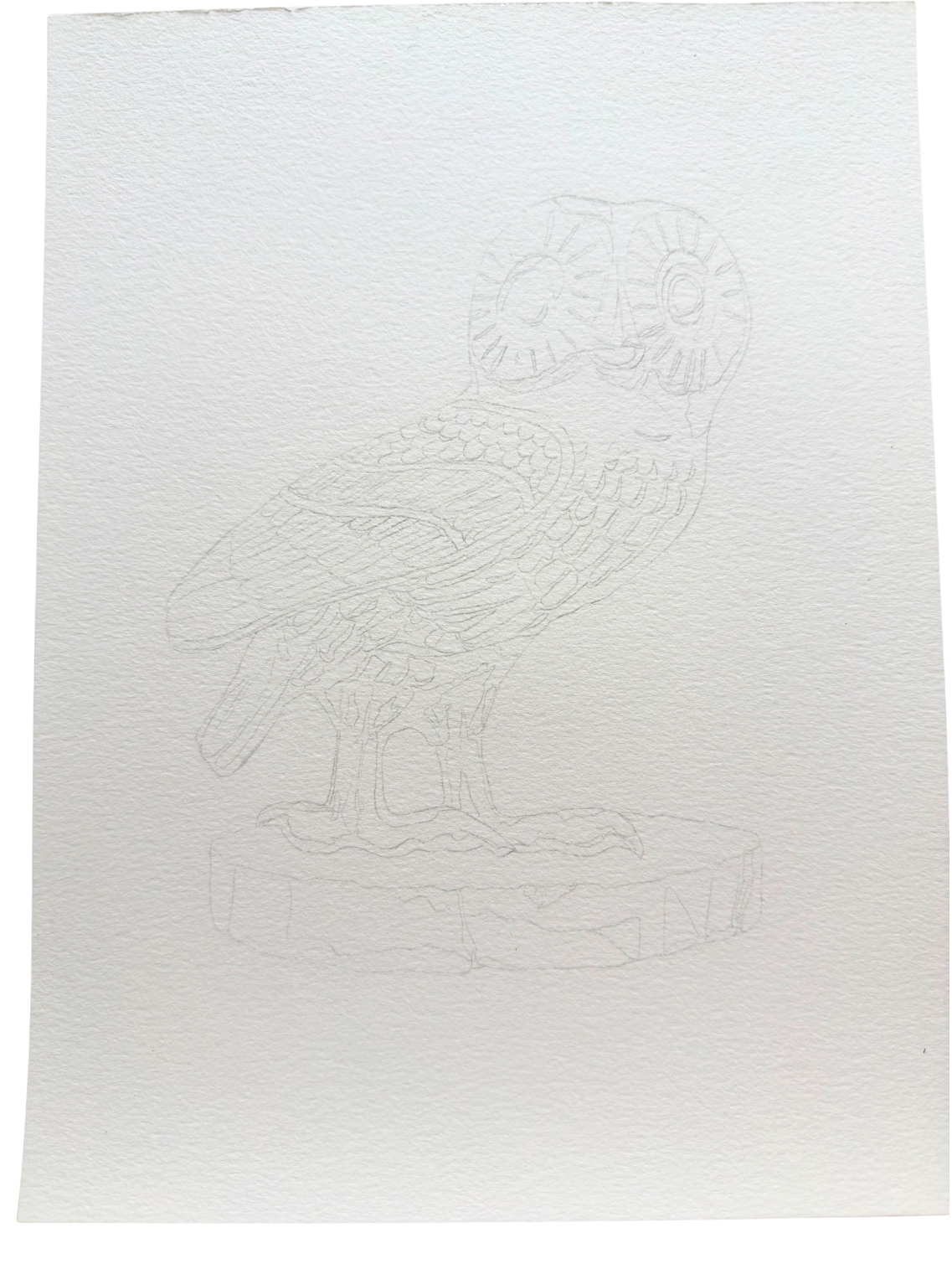
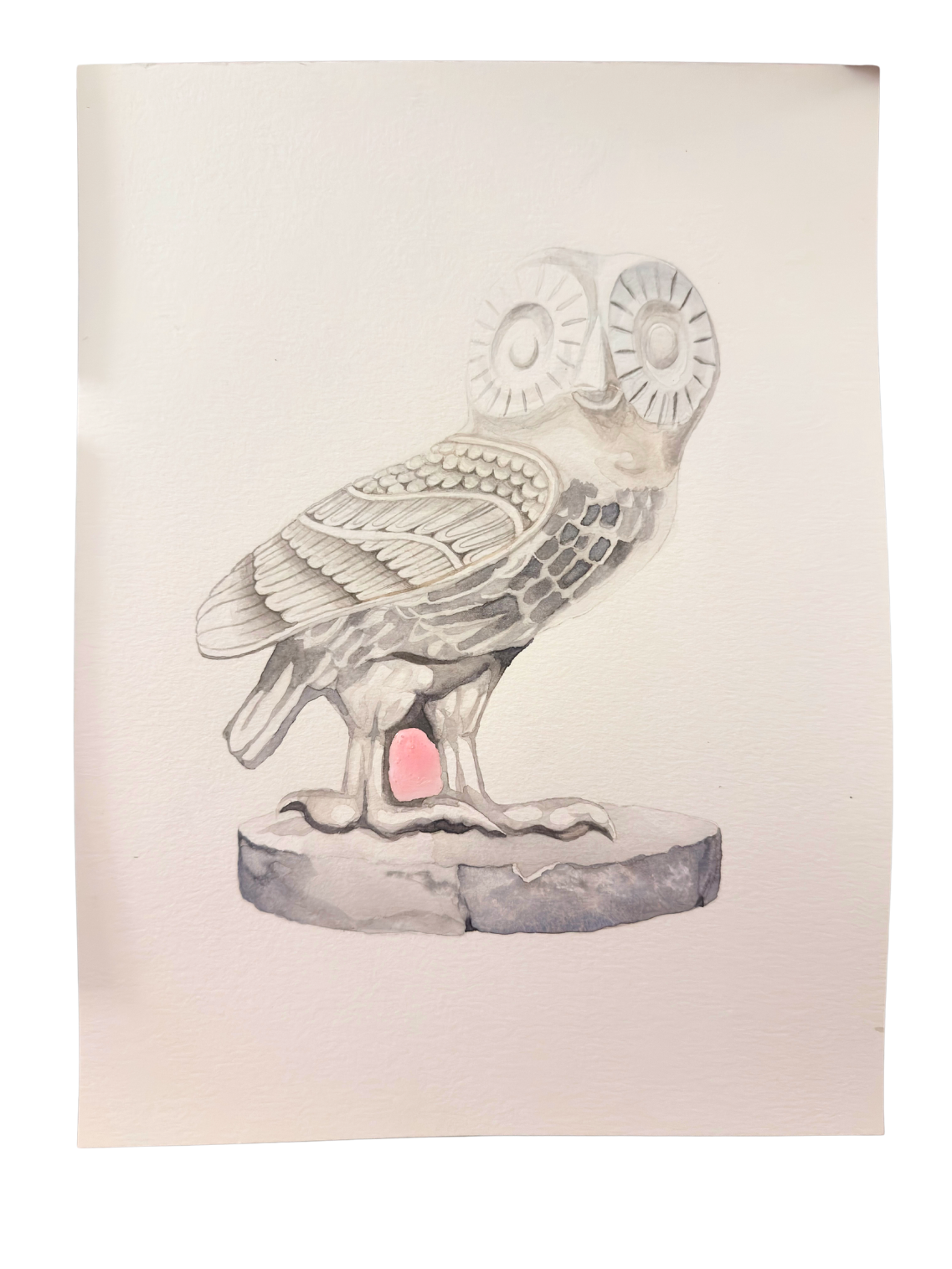
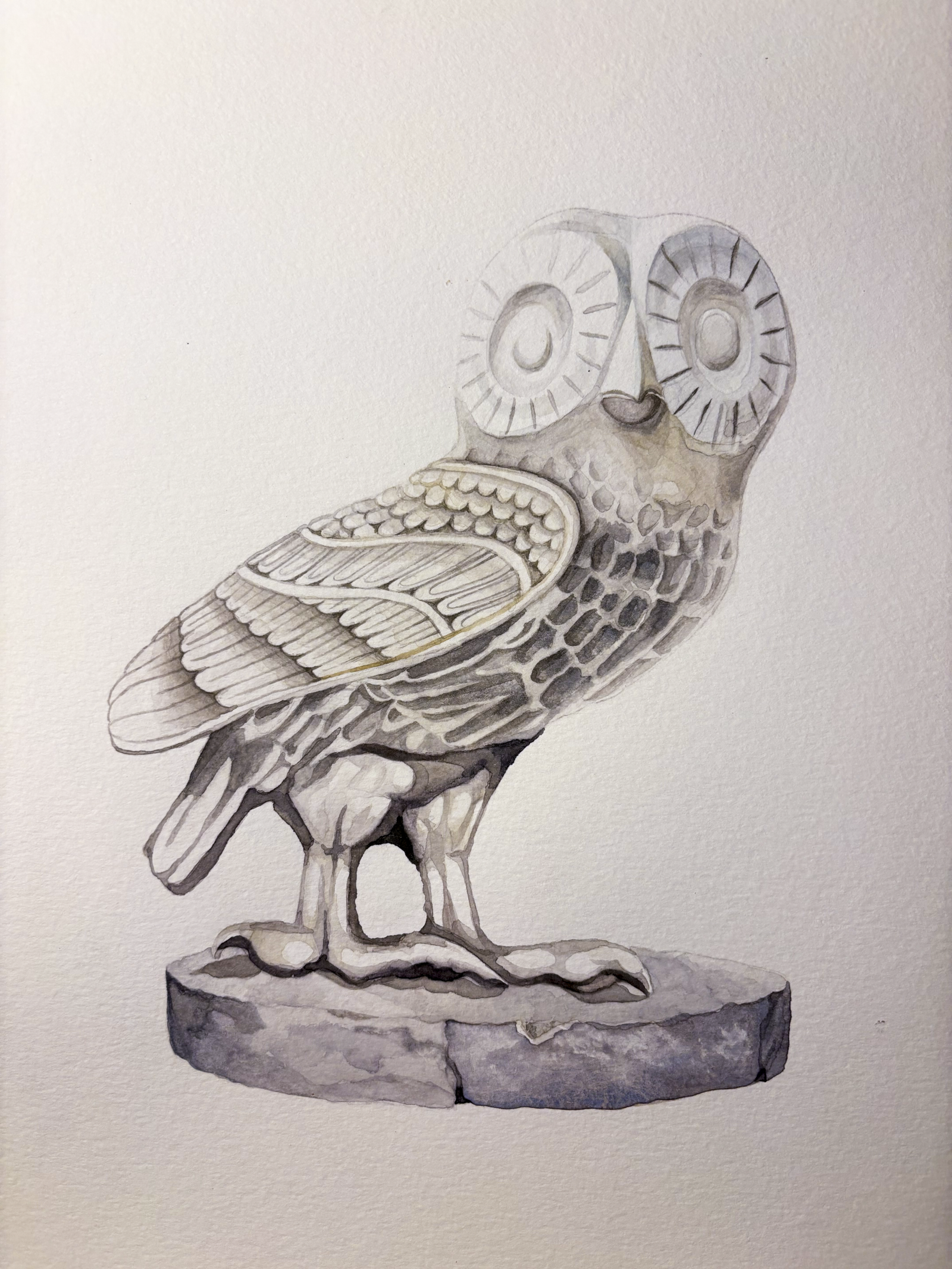
These images inform the final drawing, which is sketched by hand and then transferred to 140 lbs. cold-pressed watercolor paper. To illustrate the process, this page will follow the development of our owl watercolor design for the Chi Omega Silk Scarf.
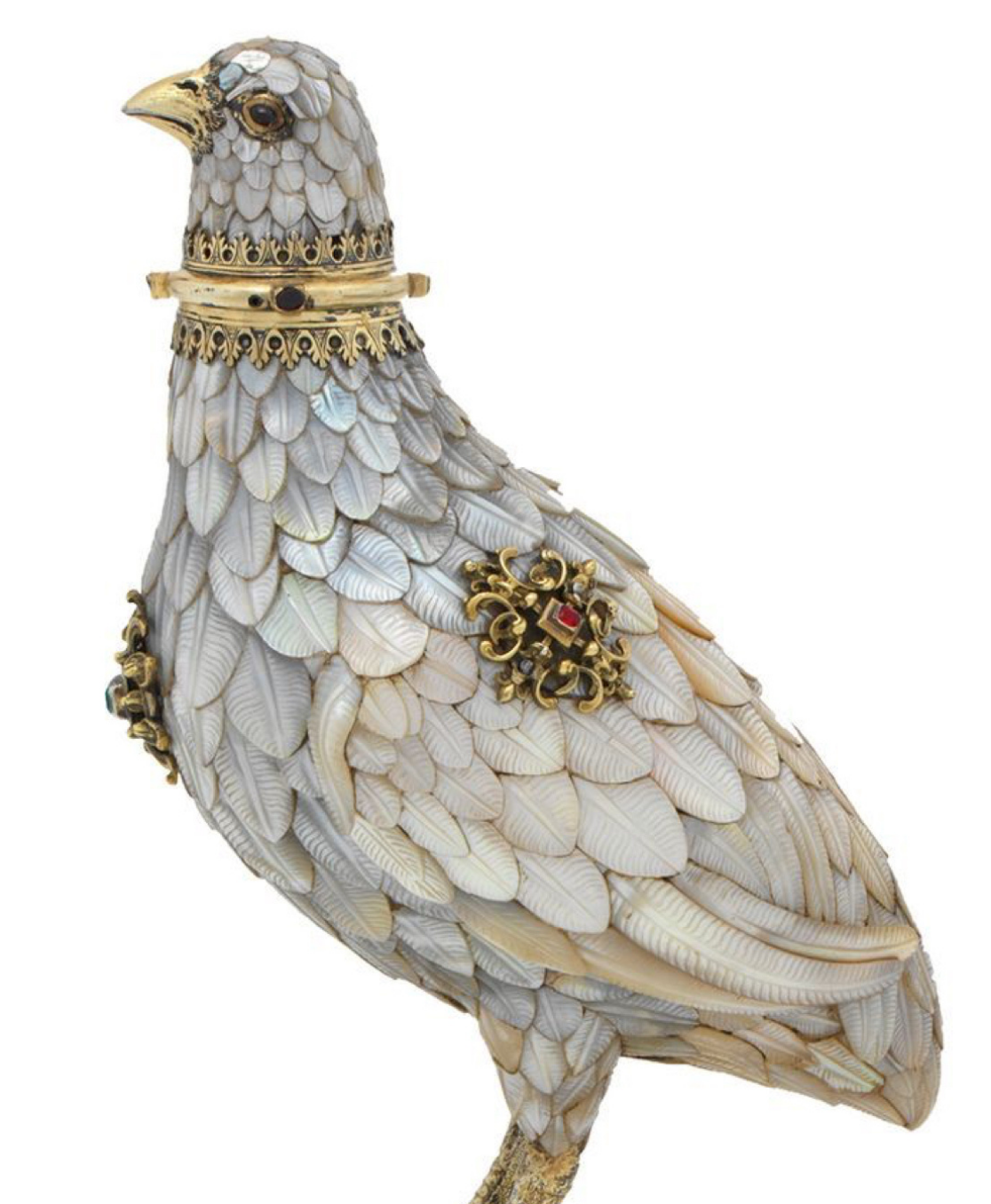
Bird (pictured): Historical reference for feather design and ornamentation. Partridge cup, by Georg Rühl (master 1598, died 1625), Mother of pearl and silver-gilt with gold and gems. Nuremberg, Germany, 1598-1602.
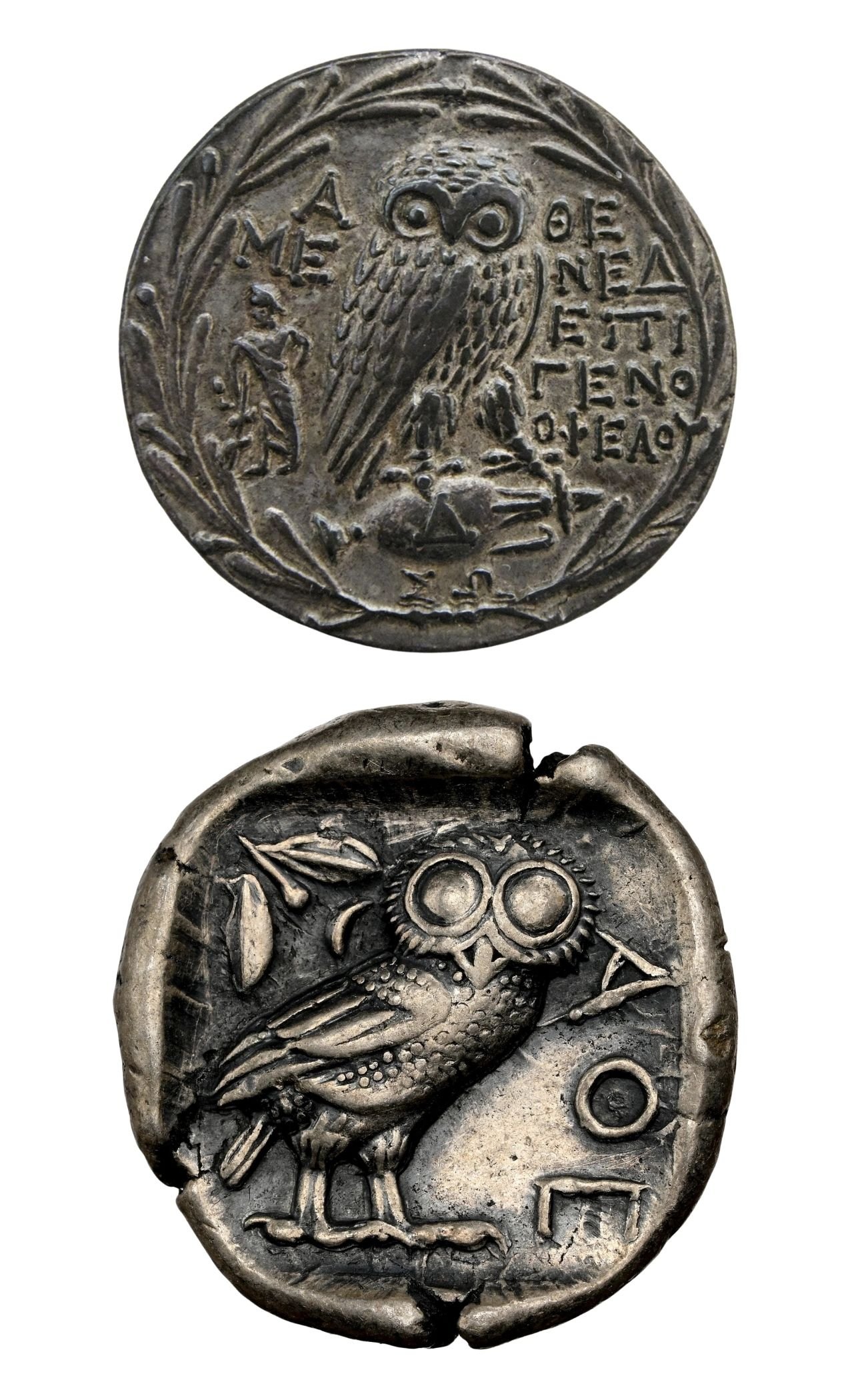
Coins (pictured): Historical reference for posing and owl render. Silver tetradrachm from Athens, reverse, ca. 200-150 BC (top) and ca. 450 BC (bottom).
Adding Color
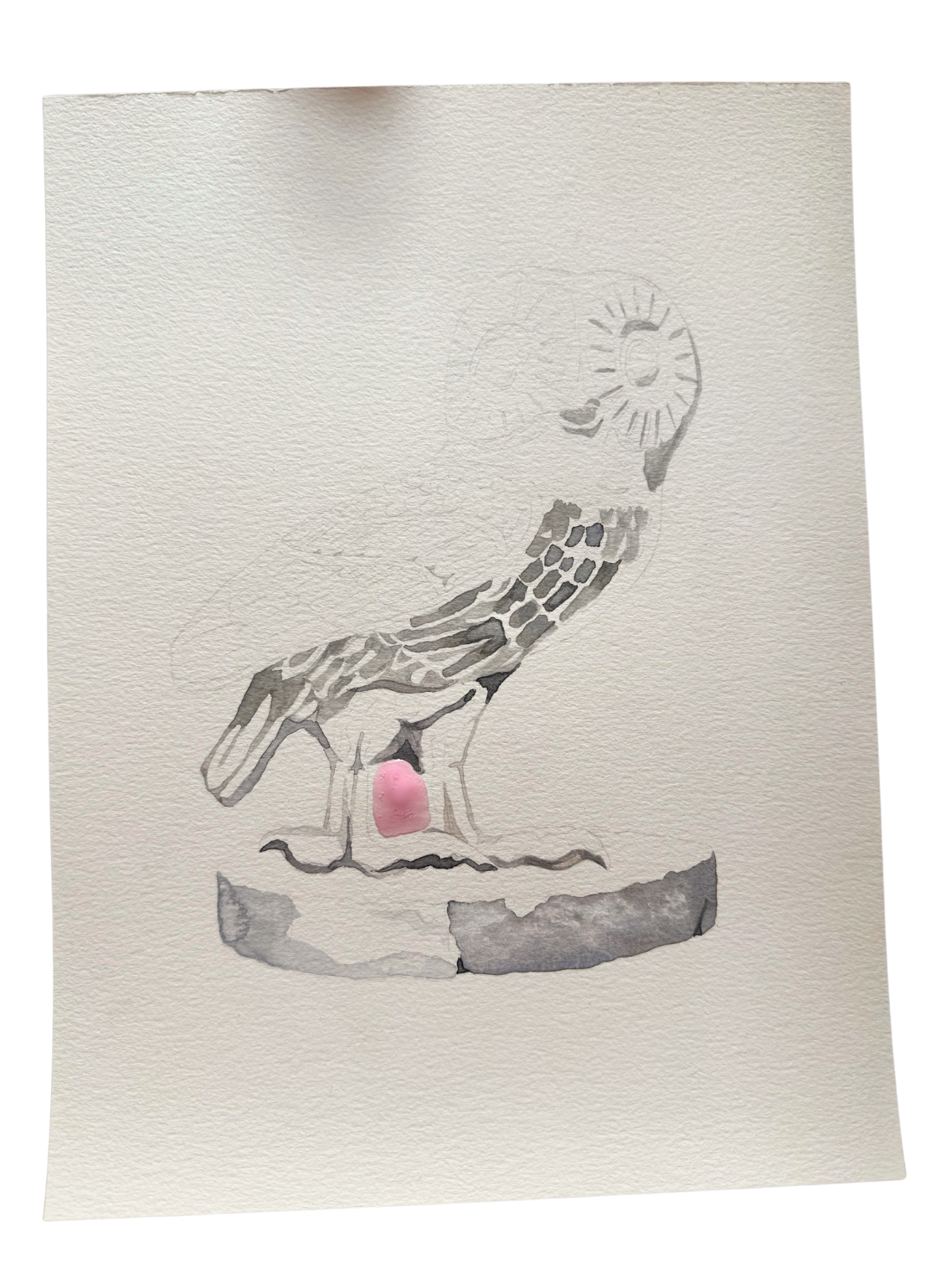
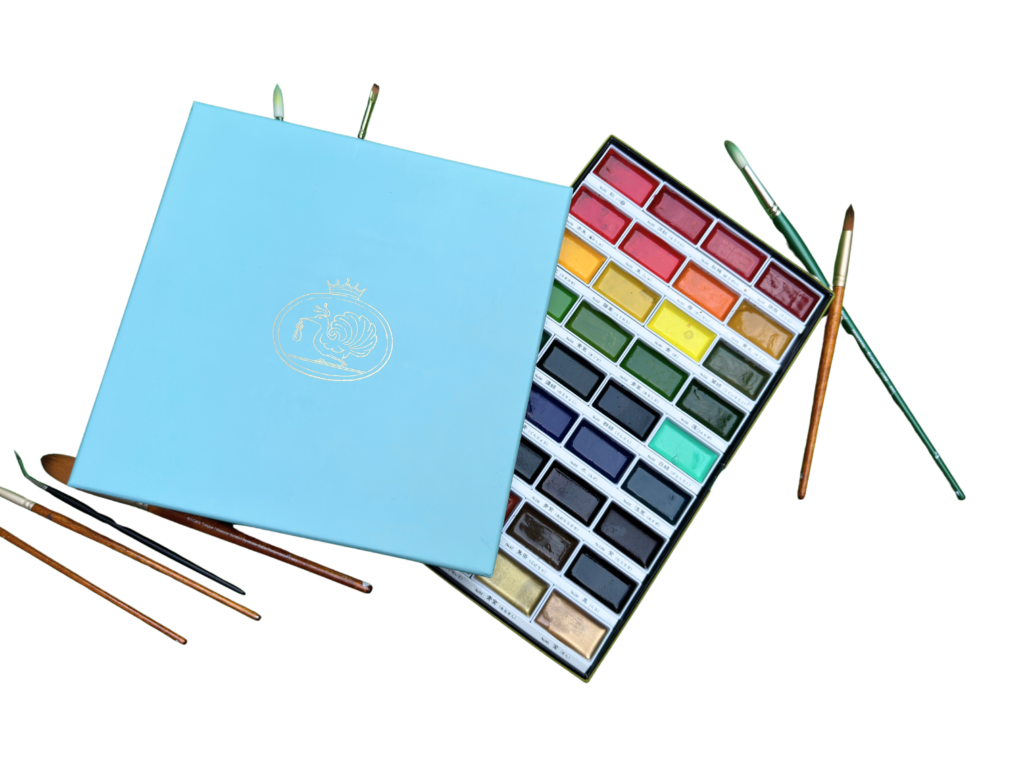
Once the paper is prepared, the process of color mixing begins. In place of traditional European watercolors, Japanese Gansai Tambi watercolor cakes are used. These paints, though commonly used in place of watercolor, truly sit somewhere between watercolor and gouache. They are water-activated but far more pigmented than Western watercolors, and have a slightly glossy finish. The most significant advantage to using Gansai Tambi is their unique formulation. Originally intended for delicate rice paper, it is both easier to lay on rich pigment in fewer layers and easier to remove color if desired, even if the paint has already dried. Furthermore, the paints do not “run” or spread out, very easily, and are therefore more suited to a wet-on-dry technique that offers the artist far more precision in capturing both shape and color. Most of the paintings for Les Précieuses use just seven or eight base colors that are then mixed together to create the harmonious yet richly varied color palette for each element.
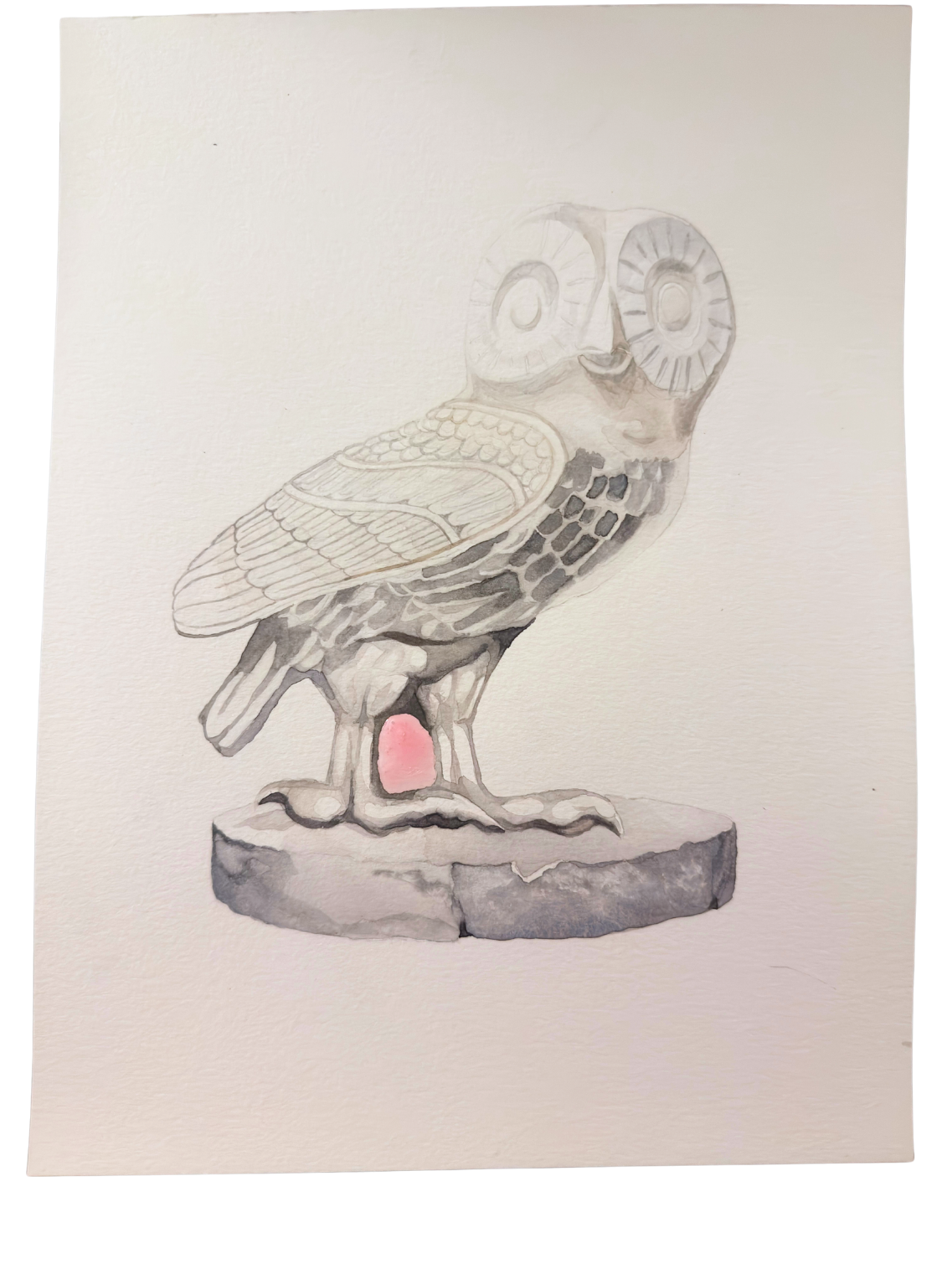
Below: A step-by-step gallery of the Chi Omega owl watercolor process. The pink liquid in between the owl’s legs is a masking fluid, which helps to keep lines clean around light areas.
Editing and Arrangement
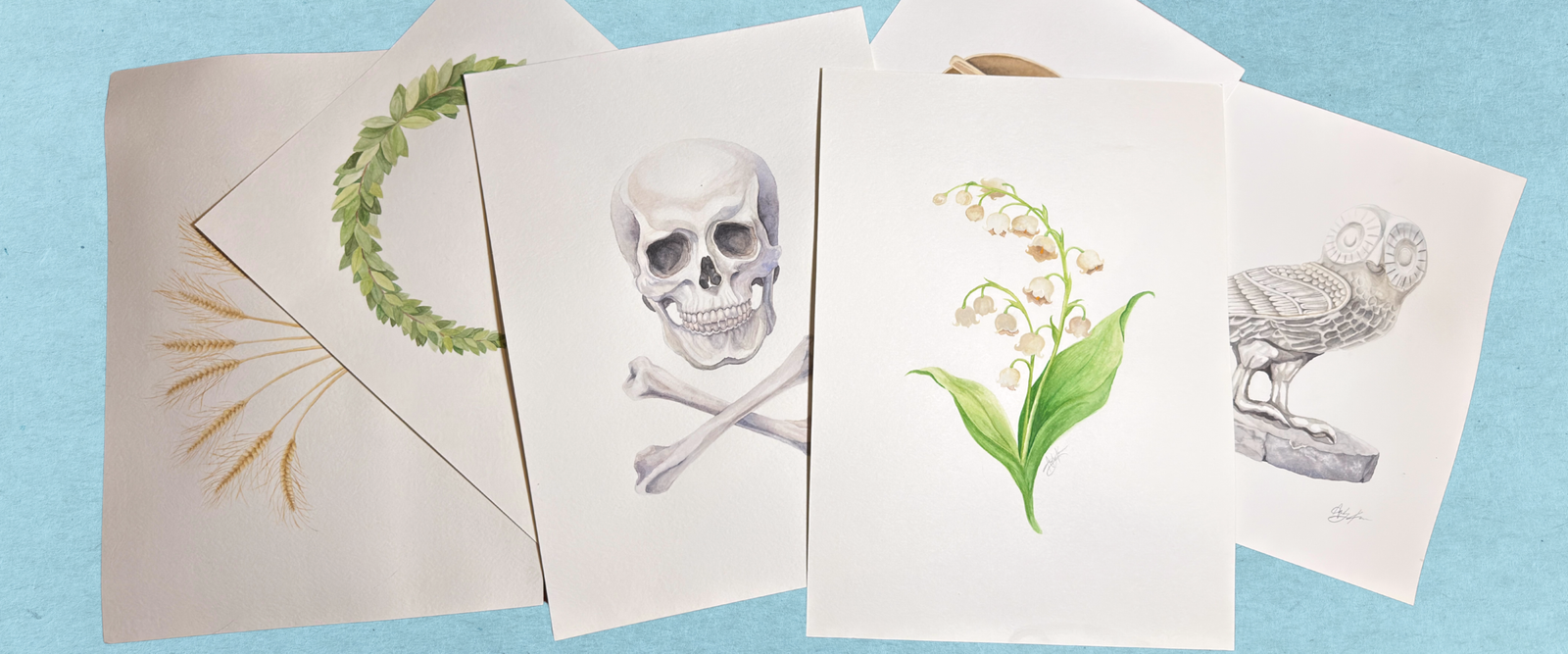
Once the watercolor painting is completed, it is digitally scanned and the white of the paper surrounding it is removed. The scan is color-graded to match the original painting and then put into place on the final design.
Though carefully planned at the very beginning of the process, the final arrangement of elements on the scarf is often slightly different, guided by the individual character of each design.
Final Production
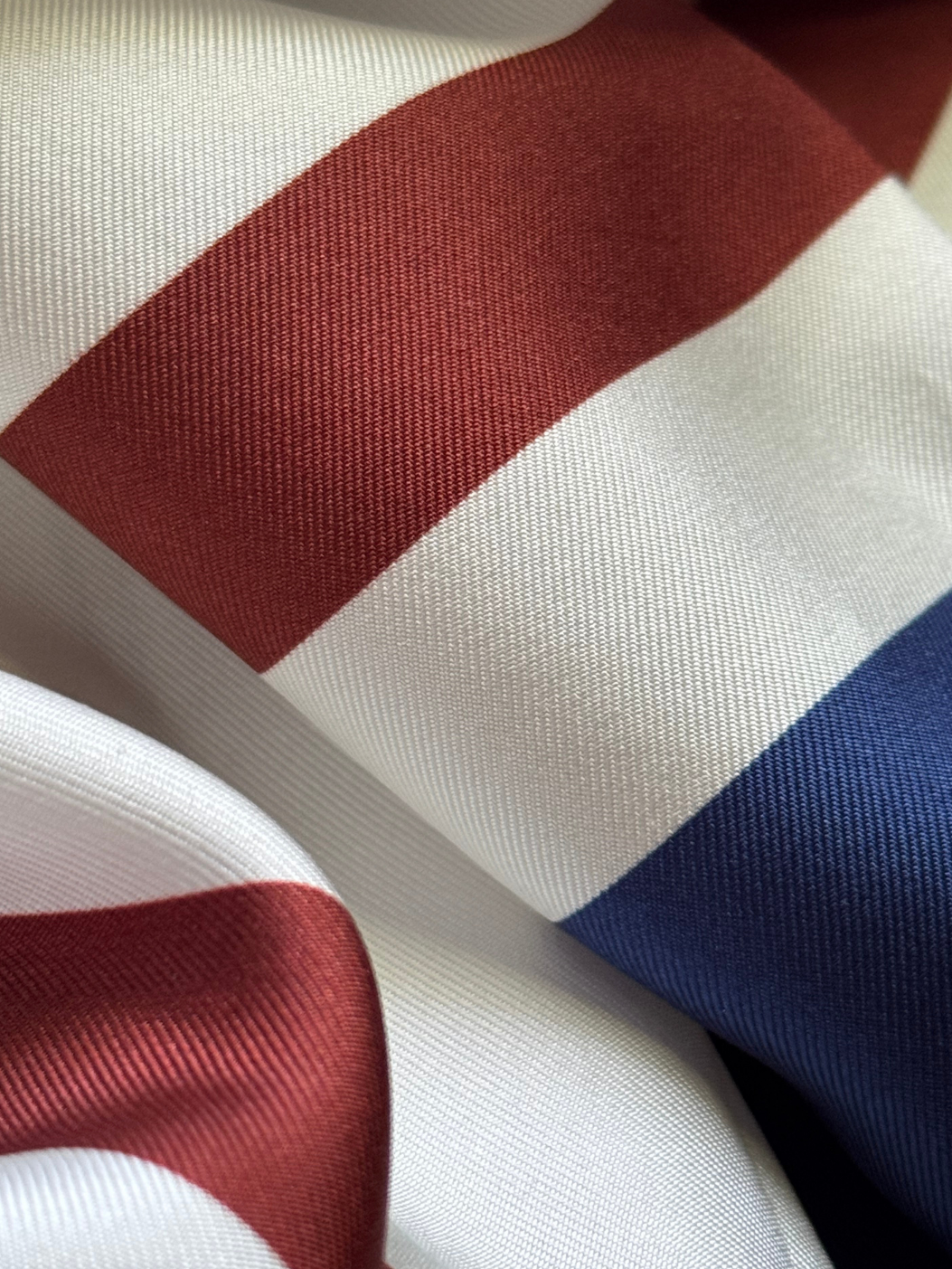
The final design is then printed on 100% 18-momme* silk twill, a light- to mid-weight fabric that drapes beautifully while holding its shape when tied. The fabric has a delicate diagonal weave with a sheen. Every edge is hand-rolled for a perfect, nearly invisible finish. With excellent care, this silk will last for decades or even several centuries. The dye used in printing is incredibly pigmented and soaks into both sides of the fabric, meaning your scarf can be tied in dozens of ways and will always look vibrant.
Finally, the scarf is wrapped in tissue, packaged in our classic square box, and arrives at your door, ready for styling, gifting, or display. For tips on styling, displaying, and taking care of your Les Précieuses scarf, or for more behind-the-scenes looks, take a peek at our social media. We hope that you enjoy un parte de notre âme, this little piece of our soul.
*Momme is the traditional method in sericulture (the process of silk production) of measuring silk’s weight and weave density. 18-momme indicates that a length of silk fabric that is 45 inches wide and 100 yards long would weigh 18 pounds.